
Who Gave Him the Power?
I’ve been thinking about power this week.
Not the kind that comes with titles or degrees or corner offices. Not the kind that lets you decide budgets or policies or who gets promoted. A quieter kind of power. The kind almost all of us carry without realizing it. The power to shape the story another person tells about themselves.
Mr. Powers probably doesn’t remember me. I imagine he graded hundreds, maybe thousands, of art projects over the years. Mine was one afternoon in a long career. But I remember him. Or maybe more accurately, I remember the story I built from that classroom. You’re not one of the artists. It took me decades to realize that a teacher had graded one assignment, while twelve-year-old Molly concluded he had graded an entire identity.
The beautiful thing is that the opposite is also true.
One question can change a story.
“What’s that you’re drawing?”
That’s all I asked.
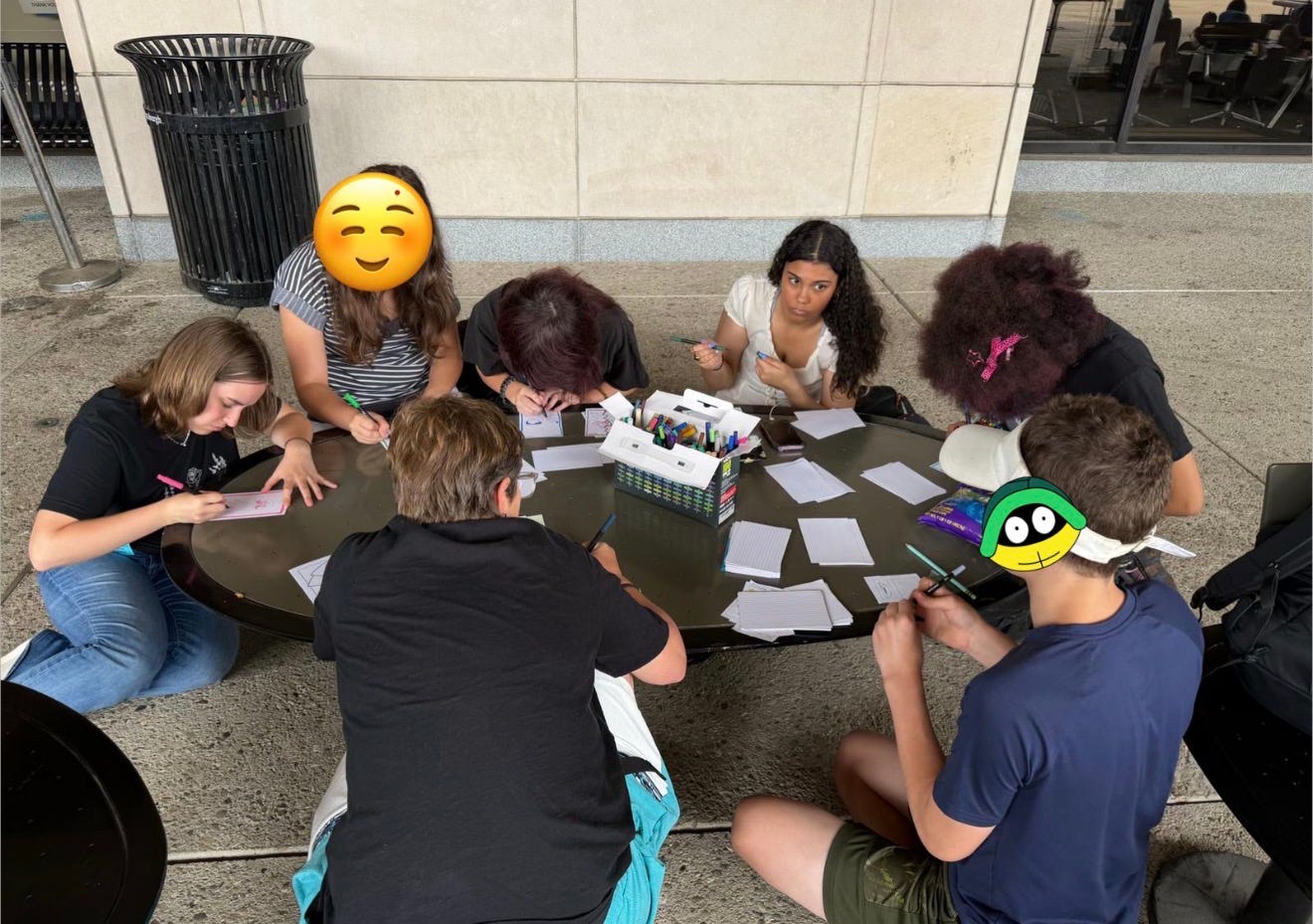
I didn’t evaluate it. I didn’t improve it. I didn’t tell the boys how to make it better. I noticed it. I was genuinely delighted by it. Within minutes, notebooks were open, characters had names, jokes were flying across the table, and by lunch we had accidentally become the comic table. By the next day, kids from other groups wandered over. Then the high schoolers joined us. Nobody announced we were starting a comics club. It grew because someone noticed what was already trying to grow.
I think that’s what gardeners do.
They don’t pull on flowers to make them bloom. They don’t stand over seedlings demanding they grow faster. They pay attention. They water. They make space. They trust that something alive already knows how to become itself if given enough light.
Lynda Barry is a gardener.
The people at the Western Pennsylvania Writing Project are gardeners.
The librarian who handed you one more book before you left for the summer was probably a gardener. The grandfather who kept asking to hear another song. The coach who saw something in you before you could see it yourself. The friend who laughed so hard at your ridiculous story that you wrote another one. None of them gave you your voice. They reminded you it had been there all along.
Maybe that’s why this week has left me feeling unexpectedly hopeful.
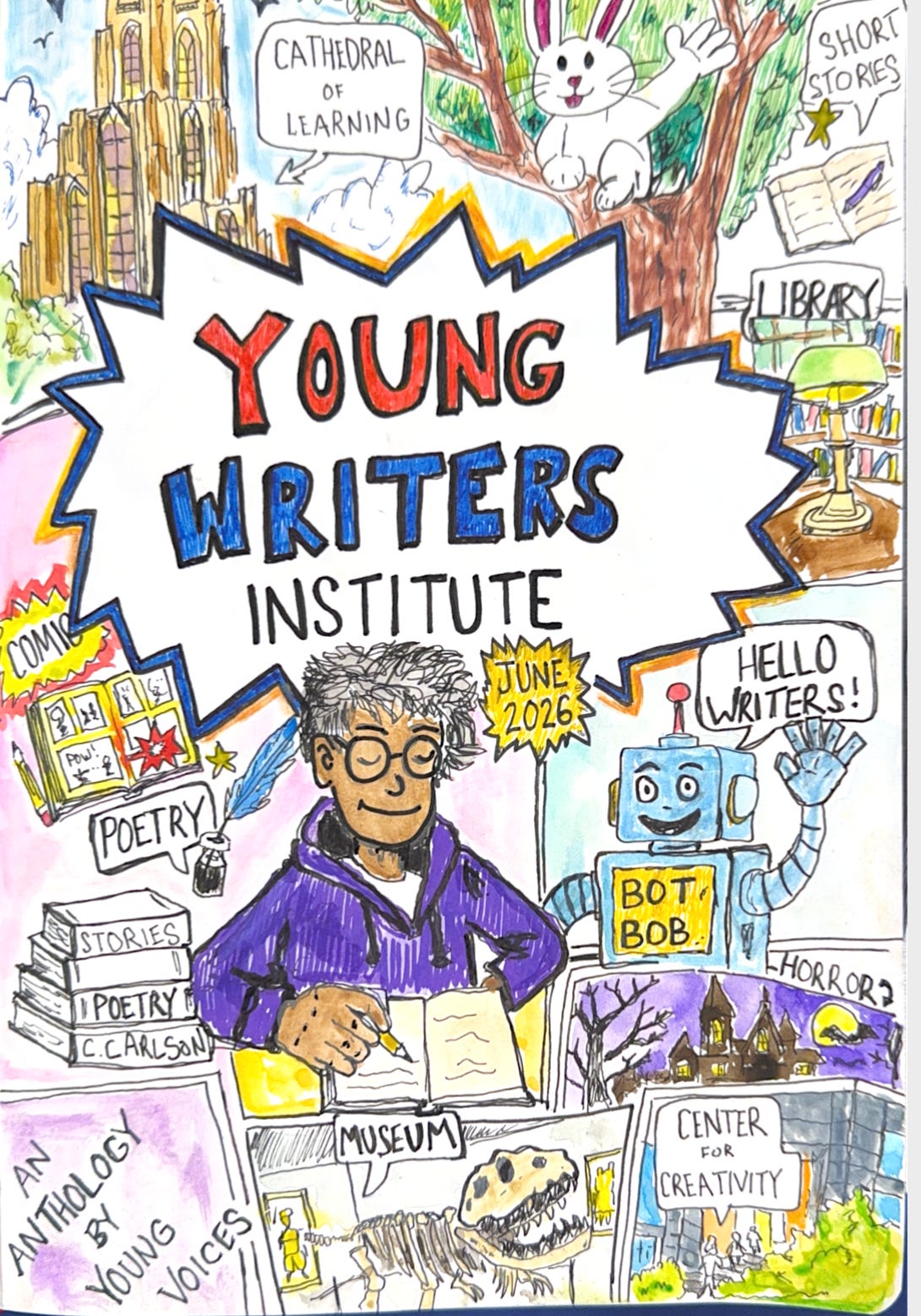
We spend so much time talking about what is broken in the world, and there is plenty. But then I spent eight days with nearly eighty young people, a stack of notebooks, a few Sharpies, and a room full of adults who kept asking questions instead of handing out verdicts. I watched poems appear in five minutes. Comics bloom over lunch. Horror stories, queer love stories, impossible romances between the sun and the moon, and tiny spiral poems that existed only because someone said, “You have ten minutes. See what happens.”
Art isn’t disappearing.
I don’t believe that anymore.
I think it’s waiting.
Waiting in the margins of math tests.
Waiting in spiral notebooks.
Waiting in the kid who hums quietly because someone once told her she couldn’t sing.
Waiting in the retiree who secretly wants to learn watercolor.
Waiting in the middle-aged woman who draws every single day while insisting she isn’t really a cartoonist.
Maybe we’ve spent too much time asking who gets to call themselves an artist.
I’m more interested in another question now.
Who gets to be a gardener?
I think the answer is all of us.
Every one of us has the chance to notice before we judge. To encourage before we evaluate. To ask one more question instead of offering one more opinion. To become the person who waters instead of weeds.
So this week, I’d love to hear about your gardeners.
The people who protected something fragile in you before you knew how to protect it yourself.
The people who looked at your crooked drawing, your awkward poem, your first garden, your garage band, your terrible first draft, your wild idea, and instead of asking whether it was good, asked you to tell them more.
Let’s celebrate them.
The world has never suffered from a shortage of critics.
But I have a feeling it could bloom with a few more gardeners
.


